
Flat mopping: the method step by step, the equipment, twin-bucket or pre-impregnation, and the method sheet to download
9 September 2026 · 9 min read
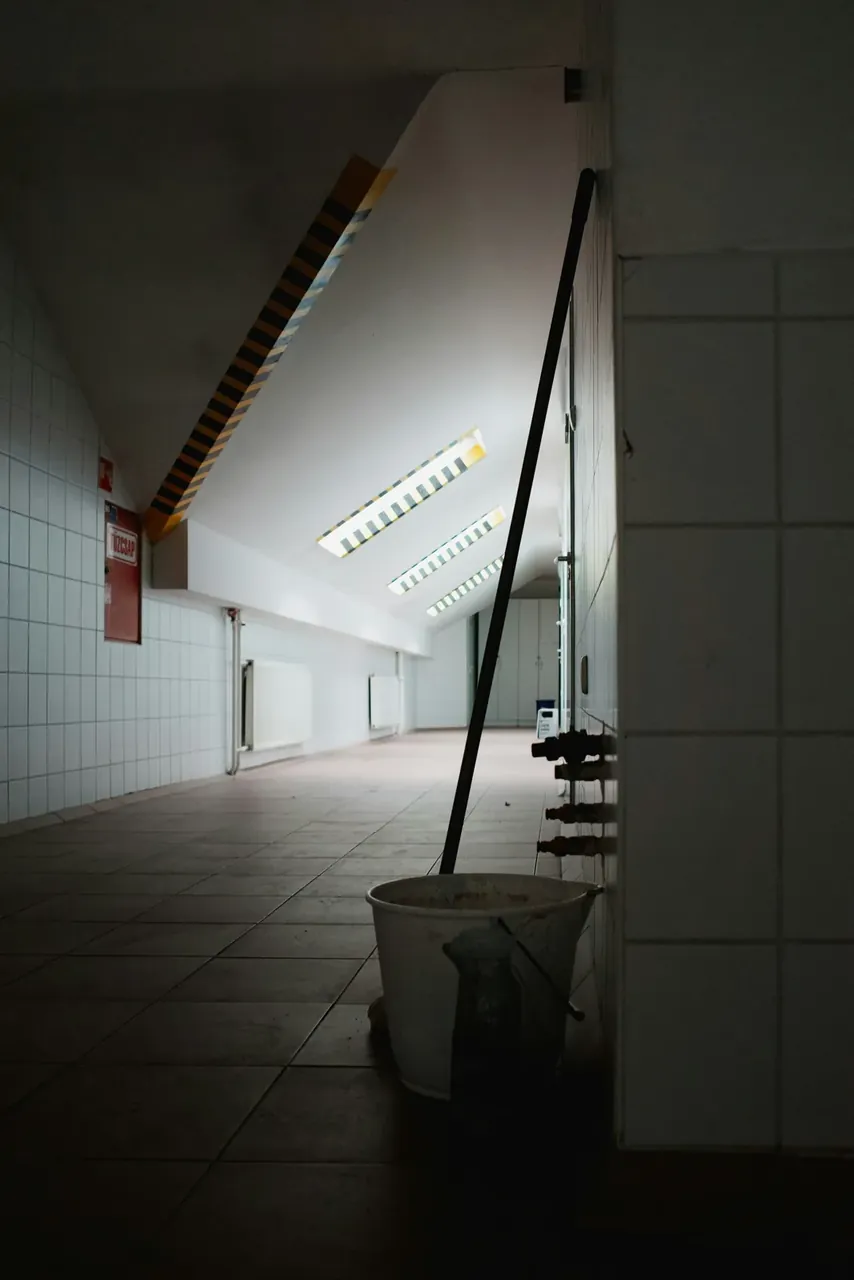
Flat mopping is the standard manual floor washing technique in commercial buildings, and the second step, after damp sweeping, in any cleaning protocol. A flat mop frame, a microfibre mop head, a correctly diluted detergent solution and a continuous S-shaped stroke: the technique is simple, which is precisely why it is so often done badly. Too much water, one dirty mop head carried from room to room, a product poured by eye, washing without sweeping first: the floor ends up wet rather than clean. This article explains why flat mopping replaced the rag and the string mop, sets out the method step by step, the equipment, the two systems in use, twin-bucket and pre-impregnation, the products, the floors and the frequencies, the most common mistakes, and how a scrubber-dryer and a robot mechanise the same action on large areas. The method sheet is available as a PDF.
Why flat mopping replaced the rag and the string mop
The floor cloth and the cotton string mop wash by putting a large volume of water onto the floor and then picking part of it up again. The dirty water goes back into the bucket, the bucket goes back onto the floor, and after a few rooms what is being spread around is a solution of dissolved soil. The floor stays wet for a long time, which makes it slippery, damages grout and skirting boards, and encourages micro-organisms in higher-risk areas. Cotton, for its part, holds fine particles poorly and dries slowly, which turns it into a culture medium between two shifts.
Flat mopping, which appeared in the 1990s with flat frames and microfibre heads, starts from a different principle: a wide, flat head that stays in constant contact with the floor and works damp, not wet. Microfibre lifts soil by capillary and electrostatic action, using very little water and very little product; the floor dries in a few minutes; and the head, changed at every room or every defined area, carries no contamination with it. Hospital hygiene guidance adopted it at the same time as damp sweeping, and it has become the reference technique in every commercial cleaning protocol, from the office to the care home bedroom.
Flat mopping belongs to a sequence: it always comes after damp sweeping, which removes dust and debris, since otherwise the mop head simply spreads them; and on the floors that call for it, disinfection follows. Our guide to floor cleaning techniques places it among the eight methods.
The method step by step
- Prepare. Damp sweeping done; the area marked with a "wet floor" sign; light furniture moved or lifted; detergent solution diluted as stated on the product data sheet, in warm or cold water depending on the product, in the blue bucket; clean water in the red bucket (twin-bucket method) or the pre-impregnated heads counted out for the shift.
- Fit the frame. A 40 cm flat frame for rooms and bedrooms, 60 cm for corridors and halls, telescopic handle set to chin height, head clipped on flat and pulled taut. The head should be damp: it must not drip when lifted.
- Start at the far end. Work from the point furthest from the door back towards it, starting with the skirting boards and the corners, so you never walk back over a washed surface.
- The S-stroke. A continuous S-shaped movement, the frame held in front of you, the head never leaving the floor, reversing at a slow walking pace; each band overlaps the previous one by a third. You do not scrub: the product and the microfibre do the work, not force.
- Never re-wet with a soiled head. Twin-bucket: wring into the red bucket (rinse water), then reload with solution from the blue bucket; change the red bucket water as soon as it turns cloudy. Pre-impregnation: one head per room or per 20 to 30 m², and the used head goes into the laundry bag, never back into the solution.
- Finish. Leave through the door, let the floor dry, and take the signage away once it is dry, which takes a few minutes. On higher-risk floors, disinfection follows, with its dwell time, on a clean floor.
- Put everything away. Heads into the washing machine (60 °C or as the manufacturer states, no fabric softener), buckets emptied, rinsed and stored upside down; frame cleaned; solution never kept from one day to the next.
Twin-bucket or pre-impregnation: which to choose
The twin-bucket system, or two-tank trolley, remains the reference for heavily soiled floors and for sites where mop head logistics are not organised: a blue bucket for the detergent solution, a red bucket for the rinse water (the colour code used on the French market), and a wringer. The head is rinsed in the red before taking up fresh solution from the blue, which keeps the clean solution usable for longer. It does require frequent water changes and proper wringing, and it takes more time and more handling.
Pre-impregnation means preparing, before the shift, a batch of heads charged with exactly the right amount of solution, in a closed box or a bag; the operative fits a clean head for each room or each defined area and drops the used one into a laundry bag. No bucket on the trolley, no water to carry, no head put back into the solution: depending on how the work is organised it is 20 to 30 % faster, lighter to handle, and above all safer in hygiene terms, which makes it the reference technique in healthcare, care homes, hotels and offices. It does assume an on-site laundry or a laundry contract, enough mop heads in stock (count one per room, plus a reserve) and careful dosing when the heads are charged.
| Criterion | Twin-bucket | Pre-impregnation |
|---|---|---|
| Heavily soiled, greasy floors | Suitable (rinsing) | Less suitable; allow for more heads |
| Hygiene (cross-contamination) | Acceptable if the water is changed often | Best: one head per room, never re-dipped |
| Speed | Baseline | 20 to 30 % faster |
| Physical strain | Buckets to carry and empty | Light trolley, no water |
| Logistics | One bucket, one wringer | On-site or contract laundry, stock of heads, charging box |
| Typical sites | Workshops, kitchens, greasy areas | Healthcare, care homes, hotels, offices, schools |
Products and dilution
In the great majority of buildings, a neutral detergent close to pH 7 is enough for daily washing: it removes everyday soil without attacking the floor covering or its protective film. An alkaline detergent (degreaser) is used on greasy floors, in kitchens and workshops, provided the floor is rinsed afterwards; a detergent-disinfectant on higher-risk floors, with the dwell time given on its data sheet; and a dedicated product on floors protected by a polish, on natural stone (never an acid) and on wood (a suitable product and very little water). Dilution is the one given on the data sheet, measured with a dosing cap, a pump or a dilution station: overdosing leaves a tacky film that holds dust and brings the dirt back faster; it costs more and dulls the floor.
Hot water is only useful with products that call for it; warm or cold water suits most neutral detergents and avoids fumes. The solution is made up for the shift and thrown away afterwards; a solution that has been used is no longer a detergent solution, it is dirty water.
Floors covered and frequencies
Flat mopping works on every hard and resilient floor: ceramic tile, porcelain stoneware, PVC and linoleum, resin, power-floated or painted concrete, sealed wood and laminate (a well-wrung head, very little water) and natural stone (a neutral stone-specific product). It does not apply to textile floors, which are vacuumed, nor to very abrasive or very large floors, where the scrubber-dryer takes over. On floors protected by a polish it maintains that protection; washing with something too alkaline strips it (see our article on floor sealing and polish).
Frequencies follow traffic and risk: daily in circulation areas, sanitary facilities, classrooms and treatment rooms, shops and restaurants; two to three times a week in individual offices; after every service in kitchens; several times a day in busy entrance halls and in wet weather. Damp sweeping, by contrast, is daily everywhere, and on its own it is enough in lightly soiled areas.
The most common mistakes
- Washing without sweeping. The head spreads dust and debris and clogs within a few metres; the floor is wet, not clean.
- Too much water. A dripping head leaves puddles, streaks and a slippery floor, and damages grout, skirting boards and wood. It should be damp.
- The same head for a whole floor. A mop head carries whatever it has picked up; use one per room or per defined area, and never the same one between sanitary facilities and offices.
- Overdosing. The residual film is tacky, dulls the floor and brings the dirt back; product is measured, not poured.
- Starting at the door. You walk back over what you have just washed and leave through the far end of the room, across a wet floor.
- Scrubbing. Flat mopping is not scouring: ingrained marks call for spot treatment or a single-disc machine, not force on the frame.
- Neglecting the equipment. Unwashed heads, unrinsed buckets, a clogged frame: dirty equipment cleans dirty. Mop heads go into the washing machine after every shift.
The scrubber-dryer and the robot: the same action, mechanised
A scrubber-dryer does in a single pass exactly what flat mopping does: it lays down a metered solution, brushes, picks the dirty water back up and dries. Walk-behind or ride-on, it delivers ten to thirty times the output of an operative with a flat mop and leaves the floor dry straight away, which makes it the reference method as soon as the open area goes beyond a few hundred square metres. The autonomous floor scrubber, or robotic scrubber, does the same work without a driver, on a programmed route plan, at 700 to 2,000 m²/h depending on the model, and records every pass; our page on the autonomous floor scrubber and our guide to commercial floor scrubbing robots go through the models.
None of that makes flat mopping redundant. It keeps everything the machine does not do: the edges and skirting boards, the corners, the stairs, the sanitary facilities, areas crowded with furniture, small rooms, and touch-ups after a spillage. On a robotised site this is exactly the division of labour behind cobotics: the robot covers the surface, the operative keeps the technique. The route plan sets out who does what, and the flat mopping method sheet stays pinned up in the cleaning store.
The flat mopping method sheet (PDF)
Free to use, no registration. A one-page method sheet covering the seven steps, the equipment, products and dilution, twin-bucket or pre-impregnation, floors and frequencies, and the mistakes to avoid, ready to pin up in the cleaning store. Download (PDF, in French) → All our templates are gathered on our cleaning templates download page.
Frequently asked questions
What is flat mopping?
What is the difference between flat mopping and damp sweeping?
Twin-bucket or pre-impregnation?
Which product for flat mopping?
How many mop heads are needed per shift?
Does a robot replace flat mopping?
A question about your own site?
Write to us and we will reply within one working day. If you want to go further, the demonstration takes place on your own floors, free of charge.