
Calculating the ROI of a cleaning robot: the complete method
14 May 2026 · 9 min read · Updated 30 July 2026
How long does it take for a cleaning robot to pay for itself? The answer depends on your site, but the method is always the same. Here is how to apply it. Market orders of magnitude, purchase price, docking station, maintenance and battery, are in our guide to the total cost of ownership of a cleaning robot. The cost of the manual cleaning service used as the reference is covered in our guide to cleaning rates per square metre.
The return on investment of robotic cleaning is often calculated badly, because it is reduced to a subtraction: the price of the robot minus the cost of an operative. The reality is richer, and more favourable once the right cost items are included.
1. Establish your real current cost
Start with what floor cleaning costs you today. Not just the visible wages: the hours actually spent on the floor, the fully loaded hourly cost, the frequency, and above all the indirect costs that nobody puts a figure on, supervision and planning, absences to cover, turnover and replacement costs, physical strain and sick leave. These hidden items are often the ones that weigh most.
2. Measure the gap with a robotic solution
Set that cost against robotic cleaning. The robot covers the large, repetitive open areas; your team stays and keeps the finishing work, edges and sensitive areas. The gap is therefore not just a cost saved: it is also team time reallocated, consistency gained and physical strain avoided.
Three gains to value
The direct time saving (floor hours automated), the quality gain (regular runs, independent of scheduling disruptions) and the HR gain (less strenuous roles, easier to fill and to keep in a sector short of labour).
3. Think over time, not at a single point
The Easy to Clean model is a monthly service, with no upfront investment and no capital tied up. ROI is therefore calculated over the length of the commitment, as a smoothed expense rather than the purchase of machines that depreciate. It is a cost-of-use logic, not a cost-of-acquisition one. To understand the difference between buying, renting and subscribing to a service, see our dedicated comparison.
4. Adjust the reading to your sector
The levers differ: in logistics, ROI comes from the area covered and 24/7 continuity; in healthcare, from consistency and traceability; in retail and hotels, from perceived quality and cleaning outside peak hours. The same robot does not "pay back" in the same way in every environment.
The industrial case: payback in factories and warehouses
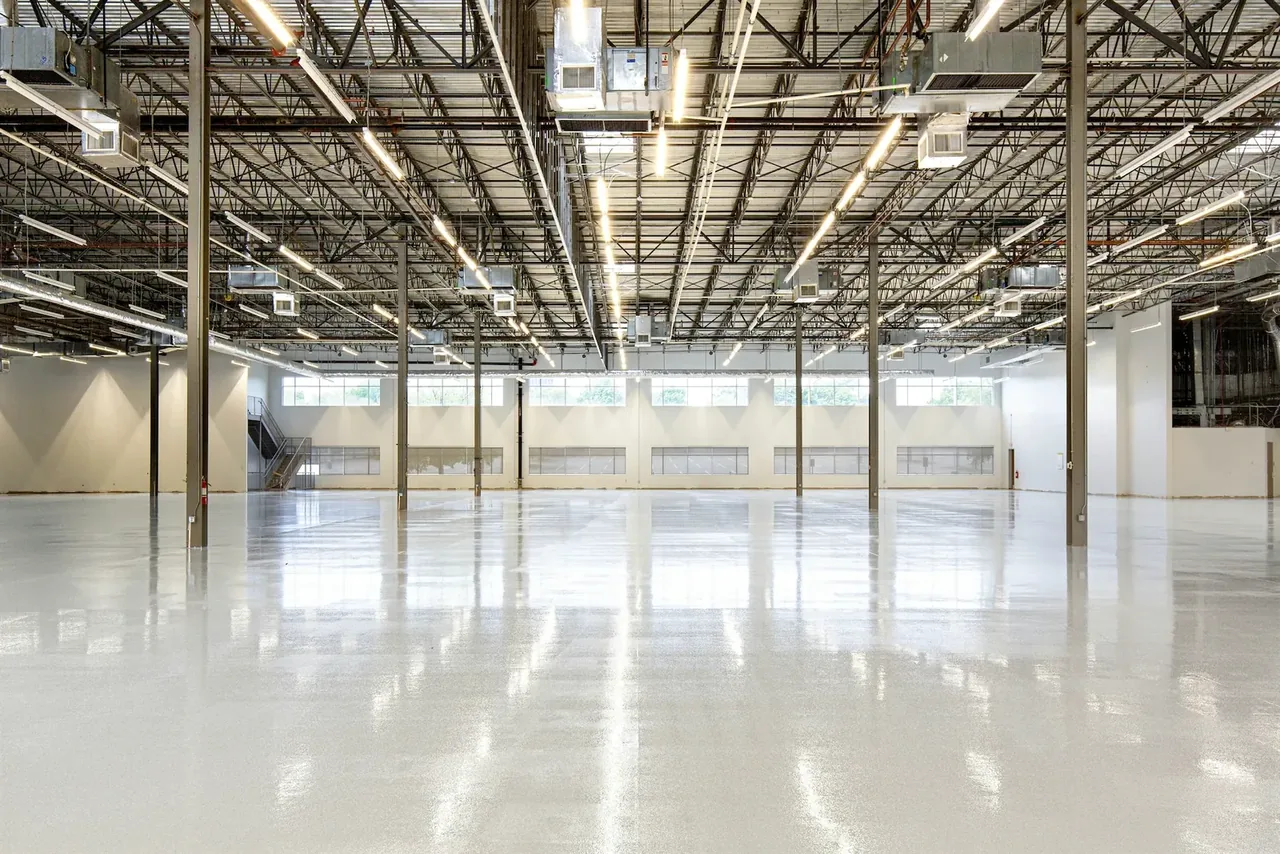
Industrial environments are where the calculation speaks most quickly. Floor cleaning time in a factory is counted in operative hours per day, over areas measured in thousands of square metres: long, flat runs, exactly the ground where a robot delivers its full productivity. The payback of an industrial cleaning robot rests on three levers. First, the cost per square metre: the larger and clearer the area, the lower the unit cost of a robotic run, whereas the manual run stays linear. Second, team productivity: the hours recovered from the aisles are redeployed to production areas, washrooms and one-off requests, without recruiting. Third, continuity: the robot works at night or between shifts, which reduces co-activity and interruptions.
For a manufacturer comparing conventional outsourcing with robotisation, the question is therefore not "how much does the robot cost" but "what does every square metre cleaned cost today, all in", supervision time, absences and replacements included. That is the baseline the demonstration establishes from your actual records, before any commitment. And if your thinking is part of a wider programme, our analysis of floor cleaning automation in Industry 4.0 places this calculation within the transformation of the site.
Get a costing for your site
A generic rate makes no sense here: everything depends on your areas, your floors and your frequency. That is why we do not display fixed prices. Describe your situation on the contact page or ask us which model, rental or purchase, suits you: you receive a personalised estimate, with no commitment, which turns this method into figures for your specific case.
Frequently asked questions
How long does it take for a cleaning robot to pay for itself?
Which costs should be included in the ROI calculation?
Is an upfront investment needed?
Does a cleaning robot pay off in a factory?
A question about your site?
Write to us and we will reply within one working day. If you want to go further, the demonstration takes place on your premises, free of charge.