
PUDU Auto-Empty Station: self-emptying for the MT1 and MT1 Max sweepers, what we know and what it changes
30 September 2026 · By Gautier F. · 15 min read
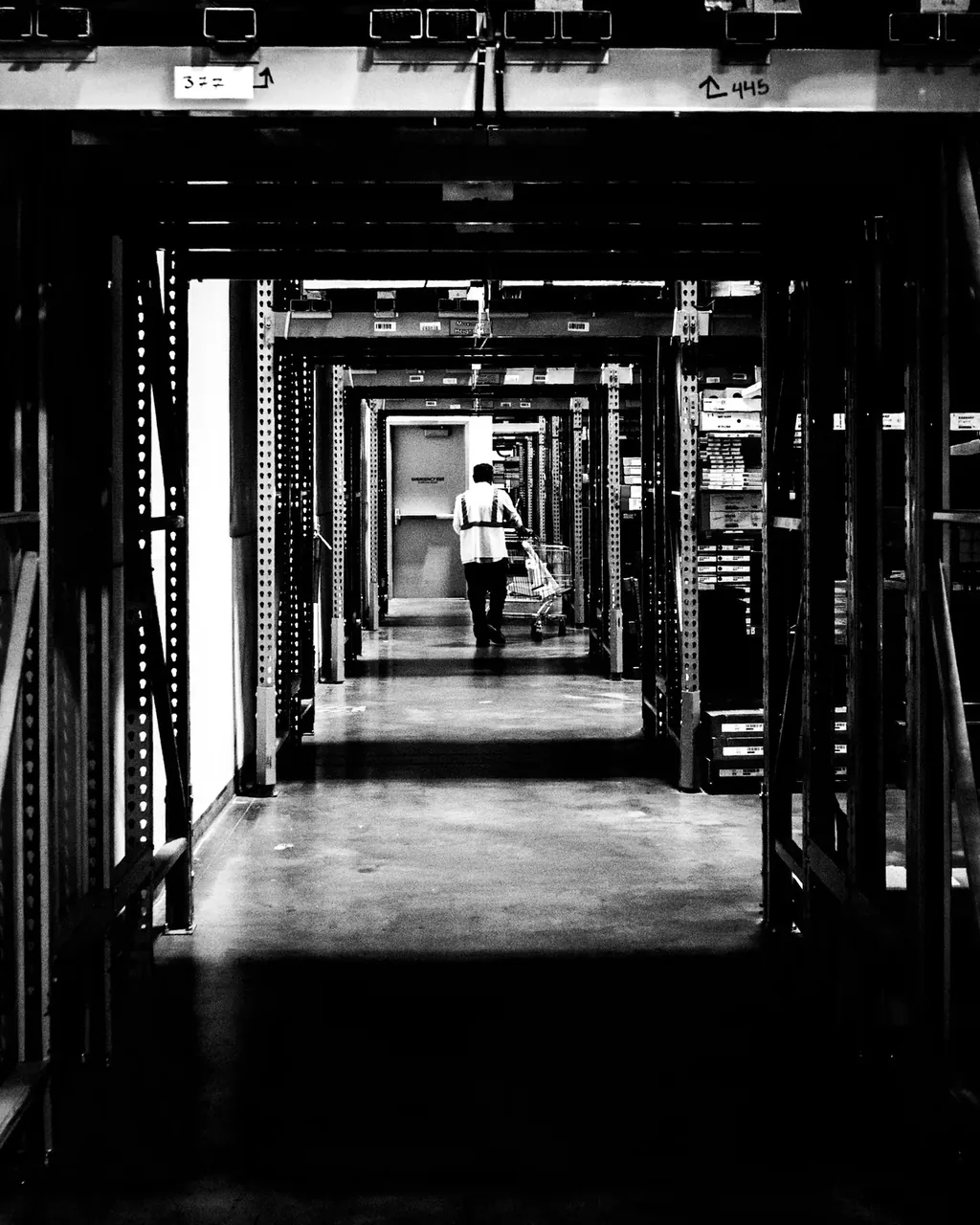
On 8 September 2026, Pudu Robotics announced on its official channels an "Auto-Empty Station" for its two autonomous sweepers, the PUDU MT1 and the PUDU MT1 Max. The message fits in one sentence: the hopper is full, but the work does not have to stop. The robot drives to the station, empties itself and carries on. The announcement is short, a video with no data sheet. Yet for anyone running an autonomous sweeper day to day, it is the most important news of the year for this range: emptying the hopper by hand was the last task preventing robotic sweeping from running unattended through a whole night. This article sets out what the manufacturer has published, what it has not yet said, what emptying really meant on site, what the station changes in how the work is organised and what it costs to run, where the announcement sits in the wider market, and what we will do with it for our clients. It will be updated as soon as Pudu publishes the specifications.
What Pudu announced, word for word
The announcement was posted on 8 September 2026 on Pudu Robotics' LinkedIn page, under the title "Introducing the PUDU Auto-Empty Station: The Final Step to Auto Cleaning", with a demonstration video. The manufacturer's text is brief. It presents the auto-empty station as an accessory shared by the two sweepers in the range, the PUDU MT1 and the PUDU MT1 Max, and sums up its value in four ideas: the hopper is full, but the work does not have to stop; the robot empties itself and goes back to cleaning; fewer stops, more cleaning time; every cleaning cycle keeps moving forward. Pudu calls this "the final step to auto cleaning", which says a great deal about how it sees manual emptying: as the last interruption in a cycle it wanted to be continuous.
The announcement goes no further than that video and text. Neither the transfer mechanism, nor the way the station itself is emptied, nor its dimensions are described. No press release, data sheet or product page accompanied the announcement at the time of writing, and the MT1 and MT1 Max product pages on the manufacturer's website do not yet mention the station.
This is therefore an announcement of forthcoming availability, in the sense that service robotics manufacturers have used the term for the past two years: the video comes before the data sheet, the data sheet before availability in Europe, and availability in Europe before the first customer deliveries, by anything from a few weeks to a few months. The closest precedent is the ET1 scrubber robot, presented in August 2026 with its 8-in-1 station, whose specifications were published on the day of the announcement; the GT mower range, announced on 2 September with partial specifications, followed the same path.
What the manufacturer has not yet published, and what we infer
For an operator, an emptying station is judged on six pieces of information that the announcement does not provide. We list them so that readers know exactly what remains open, and for each one we say what it is reasonable to expect, presented as an inference rather than a specification.
| Item | What the announcement says | What we expect (our inference, to be confirmed) |
|---|---|---|
| Station capacity | Nothing | A receptacle much larger than the robot's 35 L hopper, otherwise the station would only move the problem elsewhere; its value lies in how many robot empties it can absorb before it needs emptying itself. |
| Length of the emptying cycle | Nothing | Somewhere between a few tens of seconds and a few minutes, so that the cycle stays compatible with a night-time cleaning schedule. |
| Transfer mechanism | Nothing specific | Suction or tipping of the hopper; the choice determines noise, dust released and the kind of waste accepted (fine, damp, bulky). |
| Filtration and dust | Nothing | Filtration at the station at least equal to the robot's own, or emptying would put back into the air what the sweeping had captured. |
| Compatibility with the charging dock | Presented as an accessory for the MT1 and MT1 Max | Either one station that both charges and empties, or an emptying station separate from the current dock; in the second case, two floor positions will be needed. |
| Availability and terms | Nothing | Availability in Europe in the months after the announcement, compatibility with robots already in service to be checked model by model, and pricing on quotation, as for all accessories in the range. |
We will not speculate further. The table above is what a buyer should ask their supplier before counting on the station in a cleaning schedule; we will update it line by line as the manufacturer publishes.
Why emptying the hopper was the weak point of autonomous sweeping
The MT1 and MT1 Max are dry sweepers: they pick up dust, debris, swarf, leaves, plastic film, everything that builds up in the aisles of a warehouse, a workshop or a car park between two passes. What they collect goes into a 35 L hopper. That is a reasonable capacity for a robot of this size, and a very small one compared with the ground these robots can cover: up to 1,800 m²/h in coverage mode for both the MT1 and the MT1 Max, and 5,000 to 6,000 m²/h claimed in targeted mode, on sites of several tens of thousands of square metres.
On a clean floor, a 35 L hopper lasts a whole shift. On a dirty one, a busy logistics platform, a wood or cardboard processing workshop, a loading dock, a covered car park in autumn, the hopper fills in one to three hours. What follows is mechanical: the robot detects the full hopper, stops and waits. Over an eight-hour night shift, that means three to eight empties, at hours when nobody is there to do them. The usual workarounds were to run the robot during the day, when an operative can empty it, which throws away the value of the night slot; to restrict sweeping to lightly soiled zones, which throws away the value of the robot; or to keep someone on nights for a two-minute task every two hours, which throws away the economics.
We said as much on our own PUDU MT1 page, under the points to watch: the hopper is emptied by hand, at a rate that depends on the site, and we set that rate against the real soiling during the demonstration. The constraint is not specific to Pudu. It applies to every autonomous sweeper without an emptying station, whatever the brand, and it explains why robotic sweeping has spread more slowly than robotic scrubbing, whose water and charging stations have existed for several years.
What an auto-empty station changes in practice
The first change is to the unit of time. Without a station, the rhythm of autonomous sweeping is set by the hopper: a few hours. With a station, it is set by the station's receptacle: several days, depending on the capacity the manufacturer announces. For the site, the sweeper becomes a full-cycle machine, like a scrubber-dryer with its water station: it sweeps, empties, recharges and sets off again, and the only human task is to empty the station at a chosen moment, during the day, by an operative who is already on site for something else.
- The night slot becomes genuinely usable. An MT1 can run a complete shift, 4 to 8 hours depending on the mode, then a second one after recharging, with nobody present. Sites working three shifts keep sweeping in the quiet hours; sites closed at night gain eight hours of sweeping on aisles free of forklifts.
- The area covered extends to the dirtiest zones. These are the zones that used to be left out of the plan because they filled the hopper in half an hour: around production lines, unloading areas, docks, entrances. With a station, they become the zones where the robot delivers most.
- The cleaning plan is designed around floor area, not around empties. Today, an autonomous sweeping plan is drawn around where the person who will empty the hopper happens to be. With a station, it is drawn around soiling and traffic, which is the right criterion.
- The on-call constraint drops out of the cost. The real cost of an autonomous sweeper without a station includes the minutes spent emptying, which are trivial, and above all the need for someone to be present, which is not: that is what forced a choice between the useful slot and autonomy. The station removes the constraint, not just the minutes.
- Results become more consistent. A robot that stops with a full hopper at 2 a.m. leaves half the site unswept until the team arrives. A robot that empties itself and carries on finishes its plan. The records the robot keeps pass by pass become proof of a completed plan, not an interrupted one.
It is worth being precise about what the station does not change. It does not change the nature of the machine: the MT1 sweeps dry, it does not wash, and an industrial floor needs both, frequent sweeping and scrubbing at the right frequency. It does not change the operative's role: the robot looks after the floor area, the operative looks after technique, edges, cluttered zones, visual checks and scrubbing. And it does not remove the need for proper set-up: a station badly placed, in a forklift route or far from the dirtiest zones, loses in travel what it gains in empties. We will deal with that during the demonstration, as we do today for the position of the docking station.
A worked example on a typical warehouse
Take a logistics platform with 15,000 m² of sweepable aisles, operating from 6 a.m. to 10 p.m., with medium to heavy soiling: cardboard, film, concrete dust. An MT1 at 1,800 m²/h covers the aisles in just over eight hours of actual sweeping, which is a full night shift once travel and one recharge are allowed for. Without a station, on this kind of floor, the hopper fills roughly every two hours: four empties between 10 p.m. and 6 a.m., for somebody to carry out. In practice, the site picks one of the three compromises described above, usually daytime sweeping on part of the aisles, and the robot delivers half of what it could.
With an emptying station, the same robot sweeps all 15,000 m² every night, empties itself four times at the station and recharges, and the day operative empties the station once or twice a week, depending on its capacity, while checking the machine. The site moves from "some of the aisles, a few times a week, during the day" to "every aisle, every night", with the same robot and the same team. That gap, more than the emptying time itself, is what justifies the manufacturer's announcement.
These figures are orders of magnitude, based on what we observe on the sites we operate; the real number of empties depends on the floor, the activity and the season, and that is precisely what the demonstration measures.
Where this announcement sits in the market
On autonomous scrubber-dryers, a full station has become standard on recent models: charging, clean water filling, dirty water draining, sometimes rinsing. The Kärcher KIRA B 50 and KIRA B 200, the Gausium Scrubber 50 Pro, the Tennant X6 ROVR with its XC1 station, the Cleanfix RA 660 Navi XL with its "Unlimited" option, the Adlatus CR700 with its S700 station and, of course, the Pudu CC1 and BG1 all offer end-to-end autonomy for water and power. Our guide to commercial cleaning robots shows it model by model.
On autonomous sweepers and vacuums, it is much rarer. Across the 106 models we track, automatic emptying of dry waste is documented on only a handful of machines, including the Fybots sweep XL and its fy-dock station; most autonomous sweepers, including those from the best-established manufacturers, are emptied by hand, and several autonomous vacuums compensate with a large bag rather than a station. The reason is technical: transferring mixed dry waste, fine dust and bulky debris together, without putting it back into the air and without jamming, is harder than transferring water.
Pudu's announcement therefore places the MT1 and MT1 Max in the small group of full-cycle autonomous sweepers. If the specifications live up to it, this will be a clear differentiator on industrial and logistics sites, where sweeping is the main need and emptying was the main objection. We will update the table of models on the market as soon as the station is available, so that the station column distinguishes charging only from charging with emptying.
Where auto-emptying makes the biggest difference
- Logistics platforms and warehouses: long aisles, cardboard and film, concrete dust; the MT1 is already the most widely deployed model in the range there, and emptying was the first constraint. See our warehouse cleaning protocol.
- Factories and workshops: swarf, process dust, packaging waste; the zones near production lines, so far left out of autonomous sweeping, become coverable. See our guide to choosing a factory cleaning robot.
- Covered car parks, forecourts and semi-outdoor areas: leaves, gravel, sand; this is the ground of the MT1 Max, with its 3D LiDAR, IP54 protection and threshold crossing, and the place where hoppers fill fastest in autumn.
- Hypermarkets and shopping centres, in the back of house and stockrooms: cardboard, strapping, dust; night-time sweeping in stockrooms was limited by emptying, more than on the sales floor.
- Multi-robot sites: where an MT1 sweeps before a CC1 or a BG1 scrubs, the emptying station finally brings the sweeper's autonomy into line with the scrubber's, and the sequence of sweeping then scrubbing can run through the night with nobody present.
What we will do with it for our clients
Easy to Clean is an authorised Pudu distributor and runs MT1 and MT1 Max robots in its robotic cleaning contracts. We do not yet have the station in hand, so we will give no date, capacity or price before the manufacturer publishes them. What we can say now comes down to three points.
First, the station will fit into both forms of our offer, all-inclusive rental and purchase with a maintenance contract, on quotation, with the same demonstration, the same set-up and the same 72-hour service continuity as the rest of the range. Second, for sites already equipped with an MT1 or an MT1 Max, we will check their robot's compatibility with the station as soon as Pudu has clarified the conditions, and we will offer to add it to the current contract where it brings a real gain, meaning on sites where the number of empties limits the cleaning plan today. Third, for sites that hesitated to automate sweeping because of emptying, the announcement changes the answer: we can already design the cleaning plan with the station in mind, and start with a manual emptying rhythm set during the demonstration.
This article will be updated with every manufacturer release: data sheet, product page, availability in Europe, first deliveries. The MT1 and MT1 Max pages will be updated at the same time. To discuss your site in the meantime, get in touch.
Frequently asked questions
What is the PUDU Auto-Empty Station?
An auto-empty station announced by Pudu Robotics on 8 September 2026 for its MT1 and MT1 Max autonomous sweepers. The robot docks when its 35 L hopper is full, transfers the waste into the station and resumes its sweeping plan unaided. The manufacturer has not yet published its technical specifications.
What is the capacity of the auto-empty station?
The manufacturer has not published it. To be worthwhile, the station must be able to take several loads from the robot's 35 L hopper before being emptied itself; that number of empties absorbed is what will decide its real value. We will update this answer as soon as the data sheet is published.
Is the station compatible with an MT1 already installed?
Pudu presents the station as an accessory for the MT1 and MT1 Max, without saying whether robots already in service are compatible or whether a particular version is required. For our equipped clients, we will check each robot's compatibility as soon as the manufacturer has clarified the conditions.
When will the station be available?
No date has been given. For previous launches in the range, availability in Europe followed the announcement by a few weeks to a few months. We will inform our clients as soon as orders open.
How much does the auto-empty station cost?
No price has been published. At Easy to Clean, the station will be included in the contract, all-inclusive rental or purchase with maintenance, on a quotation drawn up after the demonstration, like the rest of the range.
Is an autonomous sweeper without an emptying station pointless?
No. On a lightly to moderately soiled floor, a 35 L hopper covers a whole shift, and many sites run MT1 robots with no constraint beyond one empty a day. The station makes the biggest difference on heavily soiled floors and on night shifts, where the number of empties required someone on site.
Does the MT1 also scrub the floor?
No. The MT1 and MT1 Max are dry sweepers; they pick up dust and debris, they do not wash. Scrubbing is the job of an autonomous scrubber-dryer, such as the PUDU CC1 or BG1, or of the cleaning team, at the frequency the site needs. Robotic sweeping and scrubbing are combined in the same cleaning plan.
A question about your own site?
Write to us and we will reply within one working day. If you want to go further, the demonstration takes place on your own floors, free of charge.